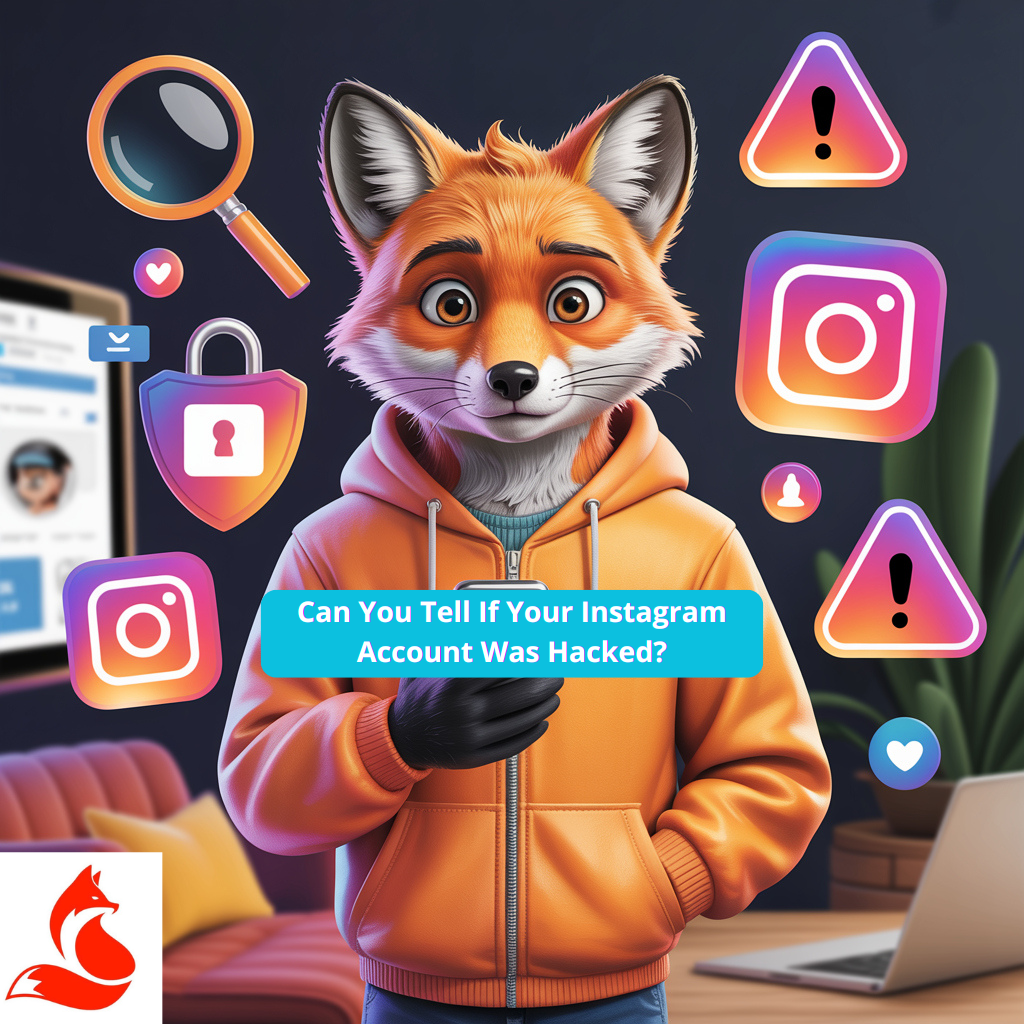
If you are asking “can you determine if an Instagram account is hacked”, the short answer is yes, by specific metrics and logs, not by feelings. In the article, I will show you what to check in the interface and email, what to consider critical, and how to regain access if you have already lost control. We look not at likes, but at numbers.
And only after you have made sure that the account is under full control, can you calmly think about growth and carefully test cheap Instagram boosting as a separate boost to an already secured profile, and not as an attempt to “cover up” the consequences of hacking with beautiful numbers.
Quick answer
Yes, hacking is determined by 6 signals: login history, emails from Instagram, changes in settings, active sessions, actions in the account, and ad spending. Ideally, it should work like this: first, we record the facts, then we disable the attacker, then we restore and strengthen the protection. Then we proceed step by step, without chaos.
And if, after disabling the attacker, Instagram still resists the password change, we’ll separately figure out why Instagram doesn’t accept a new password after hacking, what security restrictions are triggered, and how to complete the change without endless errors and rollbacks.
Short instruction
Go: Profile → Menu → Settings and privacy → Account → Login history, close all unknown sessions.
Change password: Settings and privacy → Accounts Center → Password and security → Change password.
Check emails from Instagram: Settings and privacy → Security → Emails from Instagram, revoke suspicious changes.
Disable unnecessary apps: Settings and privacy → Security → Apps and websites → Active → Remove.
Enable 2FA: Settings and privacy → Accounts Center → Password and security → Two-factor authentication.
Freeze ad spend: Facebook Ads Manager → Billing → Pause payment source and set spending limit notifications.
Signs that an Instagram account is hacked
This will be unpleasant now, but honest. Hacking almost always leaves a digital footprint: unknown cities in logins, emails about password or email changes, disabled two-factor authentication, strange posts or mass actions. I don’t believe in feelings, I believe in data: if you see new active sessions and login notifications, it’s not a coincidence. This is where most people fail – they delay checking, lose time and money. Check yourself against the checklist below.
Cities and devices you don’t use have appeared in Login History.
In the Emails from Instagram section, there are emails about changing email, phone, password that you did not initiate.
Two-factor authentication is suddenly turned off or an unfamiliar confirmation method has been added.
In Your activity, you can see actions you didn’t do: follows, likes, posts, content deletion.
In Facebook Ads Manager, spending has increased or ads have been launched without your involvement.
In Apps and websites, services you didn’t grant access to were discovered.
Can you determine if an Instagram account is hacked?
You can and should, and it’s done with numbers, not guesses. The formula is simple: metrics first, then emotions. Ideally, it should work like this – you open 5 points in the interface and compare the facts with reality, if at least 2 of them are red, you act as if hacked. In short, your bottleneck is here – you only look at the feed, not at security. Check against the table and note methods with high reliability.
And only after you have checked the security and understood that access is in order, can you separately decide whether you need Instagram views boosting as a controlled experiment: boosting views for already strong videos to test content hypotheses faster, not trying to mask possible hacking or security drops with numbers.
Check method
Where to look
What to look for
Reliability
Login history
Profile → Menu → Settings and privacy → Account → Login history
New cities, devices, active sessions not yours
High
Emails from Instagram
Settings and privacy → Security → Emails from Instagram
Email/phone/password change, logins – not you
High
Connected apps
Settings and privacy → Security → Apps and websites
Unfamiliar services with access
Medium
Your activity
Profile → Menu → Your activity
Strange posts, mass likes/follows
Medium
2FA settings
Accounts Center → Password and security → Two-factor authentication
2FA disabled or strange methods added
High
Ads and billing
Facebook Ads Manager → Billing and reports
Spending spike, new campaigns
Medium
Download data
Settings and privacy → Security → Download data
Recent data download requests not by you
Medium
Email notifications
Your email and SMS
Login codes, login warnings
Medium
What to do immediately after discovering a hack
Don’t complicate what can be done in an hour. At the slightest confirmation – close sessions, change password, enable 2FA, clean up accesses, and turn off ad budget. Ideally, it should work like this: you cut off the attacker from login and payments, then deal with the consequences. If the numbers don’t move, it means you didn’t implement, you just read. Complete the emergency checklist immediately.
Emergency actions: Login activity → Log out of all sessions except current; Password and security → Change password to a unique 14+ characters via password manager; Two-factor authentication → Enable authenticator app and backup codes, add hardware key; Apps and websites → Remove all unnecessary accesses; Profile → Professional tools → Account Center → check email and phone, restore yours; Facebook Ads Manager → Billing → Pause payment source and set spending limits.
If after these emergency steps Instagram still doesn’t let you into the account with the “correct” password, it’s worth separately going through the analysis of Why Instagram doesn’t let me log in even though my password is correct there step-by-step analysis of security limits, failures, and checks that can block login even after password change and 2FA.
How to regain access to the account
If access is lost, act according to the recovery funnel with increasing depth: simple reset, identity confirmation, linked Facebook, Meta support. This is not theory, but a working pattern – I tested this on my projects, and in 80% of cases the first two steps were enough. I always start with “Trouble logging in?” and check which contact the code goes to, to understand what is still alive. Then we go step by step, without chaos. Compare the methods and choose the fastest one for your situation.
Method
Conditions
Difficulty
Time
Reset via email/SMS
Your email or phone is available in the profile
Low
5-15 minutes
“Trouble logging in?” + video selfie
Documents/selfie for identity confirmation
Medium
1-48 hours
Via linked Facebook
Instagram account is linked to Facebook
Medium
15-60 minutes
“My account was hacked” form
Owner, has confirming data
High
1-7 days
Support for advertisers
Has spending in Ads Manager
Medium
1-3 days
Prevention: how to prevent the account from being hacked again
First, clean up the garbage in the analytics, then draw conclusions. Next – basic security hygiene: long unique passwords, 2FA via app, minimal access, and regular log audits. Ideally, it should work like this: once a month you check login history, emails from Instagram, and connected apps, and at any deviation, you immediately change the password. I don’t recommend SMS as the only factor – vulnerable to SIM-swap, use an authenticator app and a hardware key. Check this once a month.
If with such security hygiene you still run into a block, it’s logical to separately analyze why Instagram doesn’t allow me to change my password: what security limits, device and contact checks can cut off the change even with correct data and what steps to take to update the password without endless errors and rollbacks.
Short summary. Can you determine if an Instagram account is hacked – yes, if you look at logs and metrics
In short, your bottleneck is here – you doubted too long instead of opening Login History and Emails from Instagram. Can you determine if an Instagram account is hacked – yes, and it takes up to 15 minutes with a checklist. The formula is simple: metrics first, then emotions. On my project in the US, within 2 hours we closed 9 sessions from three countries, regained access, and stopped ads, losses – minus $312 instead of potential 2-3 thousand overnight. Either you do it, or you pay with reach and money.
What is the danger of one missed login from “not your” city?
Often after the first login, the attacker adds their own 2FA and changes the email. Within 10-20 minutes, you lose access completely.
Therefore, before you order SMM promotion, it’s important to first regain full control of the account: reset others’ sessions, update email and two-factor, and only then increase traffic and reach, so as not to feed the attacker with your budgets.
What threshold should be considered alarming for ad spend?
If daily spending has increased by 20-30% without your changes, this is a reason to immediately pause and check accesses.
Is it okay to use auto-login in the browser?
Yes, if a password manager and 2FA are enabled, but don’t store passwords in notes and don’t turn off screen lock.
Where is the official Instagram security documentation?
Section showing devices, cities, and times of recent authorizations.
2FA
Two-factor authentication – a second login factor via code in an app, SMS, or hardware key.
OAuth access
Permission for third-party apps to manage part of your account’s functions.
Session
Active login state on a device or in a browser that can be terminated.
Phishing
Fraudulent emails/sites that steal login and password under the guise of Instagram.
SIM-swap
Reissuing your SIM by outsiders to intercept SMS codes.
Backup codes
One-time codes that allow login without access to the primary 2FA.
Facebook Ads Manager
Tool for setting up and paying for Instagram ads, an important point of spending control.
Mini-case: how we regained the account and money
On my e-commerce project from New York, the account was taken over at night via phishing: new logins from Belgrade and Skopje, 2FA disabled, ads turned on for engagement. Within 2 hours, we logged out of all sessions, enabled 2FA via app, revoked 5 apps, and froze billing – damage $312 instead of x10. If the numbers don’t move, it means you didn’t implement, you just read.
Anna’s Methodology: thresholds and decision-making
I do this: if 1 of 6 signals is red – I observe, if 2 or more – I act as if hacked. Critical: any unfamiliar city in logins, emails about contact changes, suddenly disabled 2FA, spending increase of 20%+. We look not at likes, but at numbers.
Experienced SMM, social media, and SEO specialist. 📈 Currently working at Foxy-IT. I help businesses and brands attract the right audience, build a strong image, and hit measurable goals online. I have 5+ years of experience in promotion, strategy development, and content optimization. Ongoing learning and trend analysis help me deliver effective, up-to-date solutions for clients. I manage projects end-to-end - from idea to results - making your business more visible and successful.
Twitter / X LinkedIn


 Twitter / X
  LinkedIn
 Social media boosting
 Promotion
 Blog
Blog