I’ll take this topic without any fluff: what one checkmark in Telegram means, how it affects delivery, and what to do if it hangs for days. This article is for channel owners, SMM specialists, support teams, and sales professionals where the fact of being read matters, not just feelings. Ideally, this is how it should work: you understand the status, diagnose the cause, and fix the message route. We look at numbers, not likes.
If you need a controlled traffic start for testing, treat it as a separate experiment and use buy Telegram views as a boost tool, not as a replacement for content and delivery routes. First fix the causes of the “stuck” checkmark and sending failures, and only then carefully add paid views so they enhance working systems rather than masking problems.
Quick Answer
Short and to the point: one checkmark in Telegram means the message has been sent to the server, but the recipient hasn’t opened it yet. Two checkmarks in a private chat mean it has been read. If one checkmark stays for hours, 80 percent of the time the person is offline, has blocked you, or you’re running into privacy settings.
What Does One Checkmark in Telegram Mean?
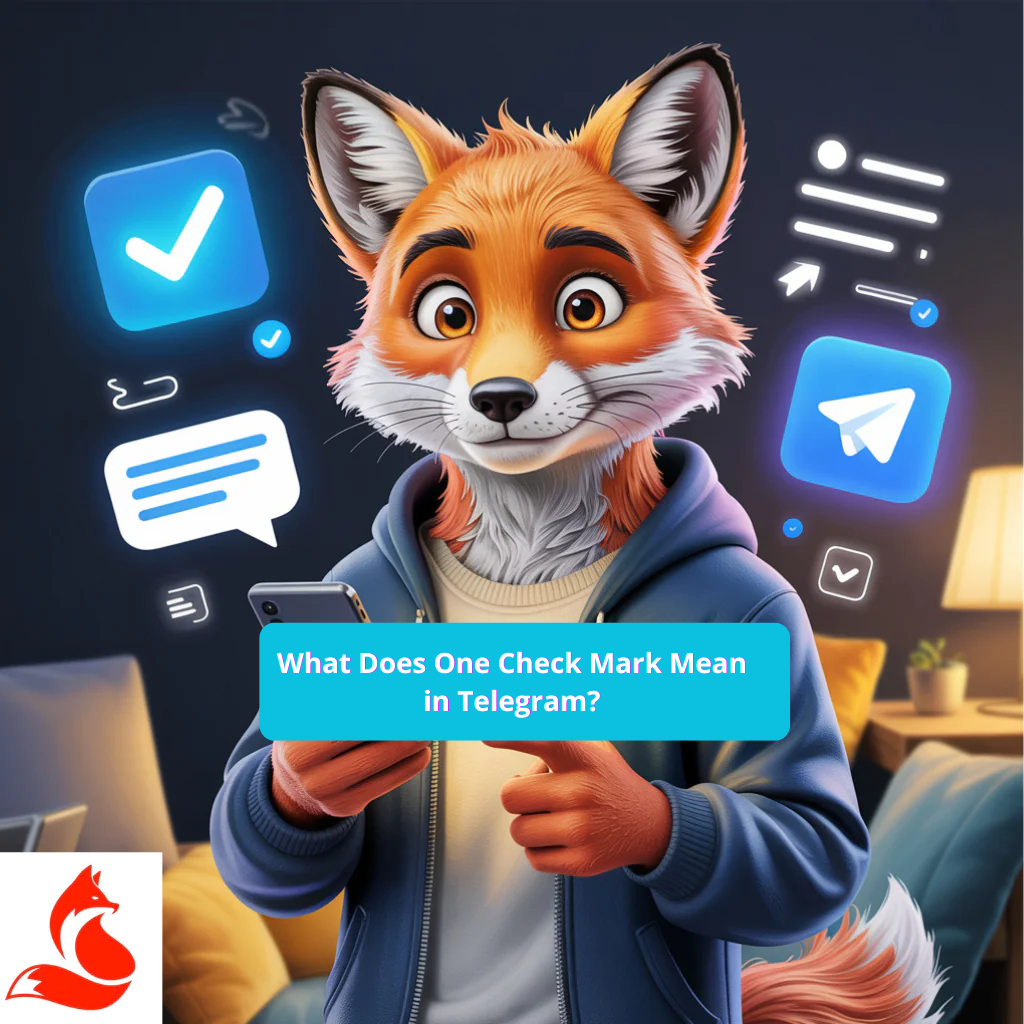
One checkmark means the message has been sent to the cloud but not yet read by the recipient. Two checkmarks in private chats mean it has been read. Telegram does not show a separate “delivered to device” status. In groups, two checkmarks work differently, and in channels there are no checkmarks, only view counts. I don’t trust feelings; I trust data. Check the status now.
How the Message Delivery Indicator System Works
Telegram records two states: sent to the server and read, with no intermediate “delivered” state. This is by design for privacy, leaving fewer traces and less pressure on users. Confirmation here: official Telegram FAQ.
Difference Between One Checkmark and Two
One checkmark means the server has accepted the message and the recipient has been notified according to their settings, but they haven’t opened the chat. Two checkmarks in a private chat mean the chat has been opened and the message has been read, so you can consider the touchpoint successful. The formula is simple: metrics first, emotions second.
Open the message and tap on it in a group – look at “Seen by” and the list of participants if the group is small.
In a channel, rely on the eye icon view count – there are no checkmarks in channels.
Check “last seen recently” in the profile – if the person is online but one checkmark persists for more than 10 minutes, it’s suspicious.
Go to Settings → Privacy and Security → Blocked Users to rule out that the contact is blocked by you.
Compare behavior between the web version and the mobile app – if there’s a discrepancy, the issue is device-specific.
Check the date of the last app update – outdated versions sometimes get stuck on statuses.
Possible Causes of One Checkmark with Stable Internet
The recipient is offline, in “Do Not Disturb” mode, or has notifications disabled – the chat hasn’t been opened, so the second checkmark won’t appear. You may have been blocked – then there will be a permanent single checkmark and no avatar/status visible. Rare delays can happen on the server side, or the recipient may have a bottleneck: full storage, battery saver, or auto-cache clearing.
If you’re considering buy Telegram subscribers as a growth tool, keep quality in focus: fine-tune to attract a genuinely engaged audience from channels with relevant topics, so new subscribers don’t just sit in the list but actually open the chat, turn one checkmark into two, and boost real engagement with your messages.
What One Checkmark in Telegram Means in Different Scenarios
In private chats, two checkmarks mean read; in secret chats, the logic is the same, but with end-to-end encryption. In groups, don’t expect universal “read” status – you may see a list of viewers in small groups within 7 days. In channels, there are no checkmarks at all – only view counts, forwards, and reach. This is not theory; it’s a working model. Save the comparison below.
Private Chats
If the contact hasn’t blocked you and has opened the conversation, you’ll see two checkmarks. If there’s always just one checkmark and there’s no response to calls, there’s a high chance of being blocked or that the person hasn’t logged in for a month. Simply put, this is where you’re stuck.
To understand what’s behind the checkmarks and the numbers in your statistics, review the material How Views Are Counted in Telegram: it breaks down step by step what actually counts as a view, how to distinguish genuine interest from empty impressions, and why solid metrics matter more than the subjective feeling of “being ignored.”
Groups and Channels
In groups, double checkmarks don’t mean “everyone has read it” – they indicate reading, but each participant has their own timing dynamics; in small groups, a “Seen by” list is available for up to 7 days after sending. In channels, there are no checkmarks – rely on the eye icon view count and source dynamics. Details from Telegram’s blog: read receipts in groups.
Icon
Where
What It Means
What to Do
1 checkmark
Private, groups
Sent to server, not read
Wait or ping via another channel
2 checkmarks
Private
Read by recipient
Set a deadline for a response
No checkmarks
Channels
View count only
Monitor reach and retention
Eye icon
Channels
Post view count
Compare with subscribers and sources
Privacy Settings and Blocks
In private chats, it’s not possible to disable read receipts entirely – if the person opens the chat, you’ll receive two checkmarks. If they have blocked you, there will be a permanent single checkmark and silence. Settings path: Settings → Privacy and Security → Blocked Users.
What to Do If You Always Have One Checkmark
This might be blunt, but it’s honest: if you’ve had one checkmark for weeks, you’re being ignored, blocked, or you’ve run into a technical bug. Let’s go step by step, without chaos: check the network, device, and app versions, then test the blocking hypothesis. On a B2B sales project in Telegram, the median time-to-read dropped from 11 hours to 3 hours after cleaning up network restrictions and updating apps. The response conversion increased by 19 percent. If the numbers aren’t moving, it means you didn’t implement, you just read. Go through the algorithm below.
Network Diagnostics
Switch between Wi-Fi and mobile data, then resend the message – this will help rule out local issues. In Telegram: Settings → Data and Storage → Network Usage, check outgoing traffic and errors. Don’t overcomplicate what can be done in an hour.
If you want to go beyond fixing delivery and understand audience response to content, dedicate a separate analysis to the question How to See Who Viewed Your Telegram Post? – it breaks down step by step which metrics and indirect signals help you read audience behavior without a direct list of “who was there.”
Checking Device and App Version
Update the app: App Store → Updates, or Google Play → Manage apps → Available updates. On Desktop, check Settings → Advanced → Connection Type, try “Default” or “Only TCP.” Clear the cache selectively: Settings → Data and Storage → Storage Usage → Clear Cache.
Contact in Block List
If you’ve added someone to your block list, messages logically won’t get through – the single checkmark will remain forever. Check: Settings → Privacy and Security → Blocked Users, unblock, and test with a new message. This is where most people fail.
Network: switch connections, check VPN and battery saving for connectivity.
The bottom line is simple: one checkmark in Telegram means the message was sent but not read, and your task is to understand why. The formula is simple: metrics first, emotions second. Eliminate network noise and outdated versions, check block lists, measure the median time to the second checkmark, and the solutions will become obvious. First clean up your analytics, then draw conclusions. Either you do this, or you pay with your reach.
At the same time, understand why the Telegram code comes to email: when it’s a standard security scenario when changing devices or recovering access, and when it’s a signal that someone is trying to log in without your knowledge, making it time to check the security of your email and account.
How Long Should You Wait for a Transition from One Checkmark to Two?
In B2C, it’s usually 15-120 minutes; in B2B, up to one business day. If it’s longer, it’s not waiting time, it’s a lost connection.
Can You Turn Off Double Checkmarks in Private Chats?
No. Telegram does not allow you to disable read receipts in private chats. As soon as the person opens the conversation, you will see two checkmarks. Privacy is managed through the “Last seen” status, not through read receipts.
Why Are There No Checkmarks in Channels?
Channels are for broadcasting, so they show view counts rather than individual delivery statuses. You should evaluate reach, retention, and sources, not checkmarks.
How to Know If You’ve Been Blocked
Combination of signs: a permanent single checkmark, no avatar and no status visible, calls won’t go through. You cannot verify this 100% without contacting the person through a third party.
Glossary
Term
Definition
One checkmark
Message has been sent to the Telegram server; the recipient has not opened the chat.
Two checkmarks
Message has been read in a private chat.
View count
Eye icon in channels showing the number of post opens.
Time-to-double-check
Time from sending a message until two checkmarks appear.
Secret chat
End-to-end encrypted chat; checkmark logic is the same as in private chats.
Contact block
A status where messages do not reach the recipient; a single checkmark stays permanently.
Read receipts
Confirmation of reading; in Telegram, this is the two-checkmark indicator.
Median
A robust measure of central tendency for time-to-double-check.
Experienced SMM, social media, and SEO specialist. 📈 Currently working at Foxy-IT. I help businesses and brands attract the right audience, build a strong image, and hit measurable goals online. I have 5+ years of experience in promotion, strategy development, and content optimization. Ongoing learning and trend analysis help me deliver effective, up-to-date solutions for clients. I manage projects end-to-end - from idea to results - making your business more visible and successful.
Twitter / X LinkedIn



 Twitter / X
  LinkedIn
 Social media boosting
 Promotion
 Blog
Blog